Choosing a kitchen backsplash can feel like one of the smaller decisions in a renovation, but it has a big impact on how the finished space comes together.
Your backsplash sits directly between two of the most noticeable finishes in your kitchen: the cabinetry and countertops. That means the right tile needs to do more than look good on its own. It needs to work with the colours, undertones, patterns and textures already happening around it.
Whether you’re planning a full kitchen renovation or narrowing down your final selections, here’s how to choose a kitchen backsplash that works with your cabinets, countertops and the overall design of your space.
Start With the Strongest Feature in Your Kitchen
Before choosing backsplash tile, decide which element you want to lead the design.
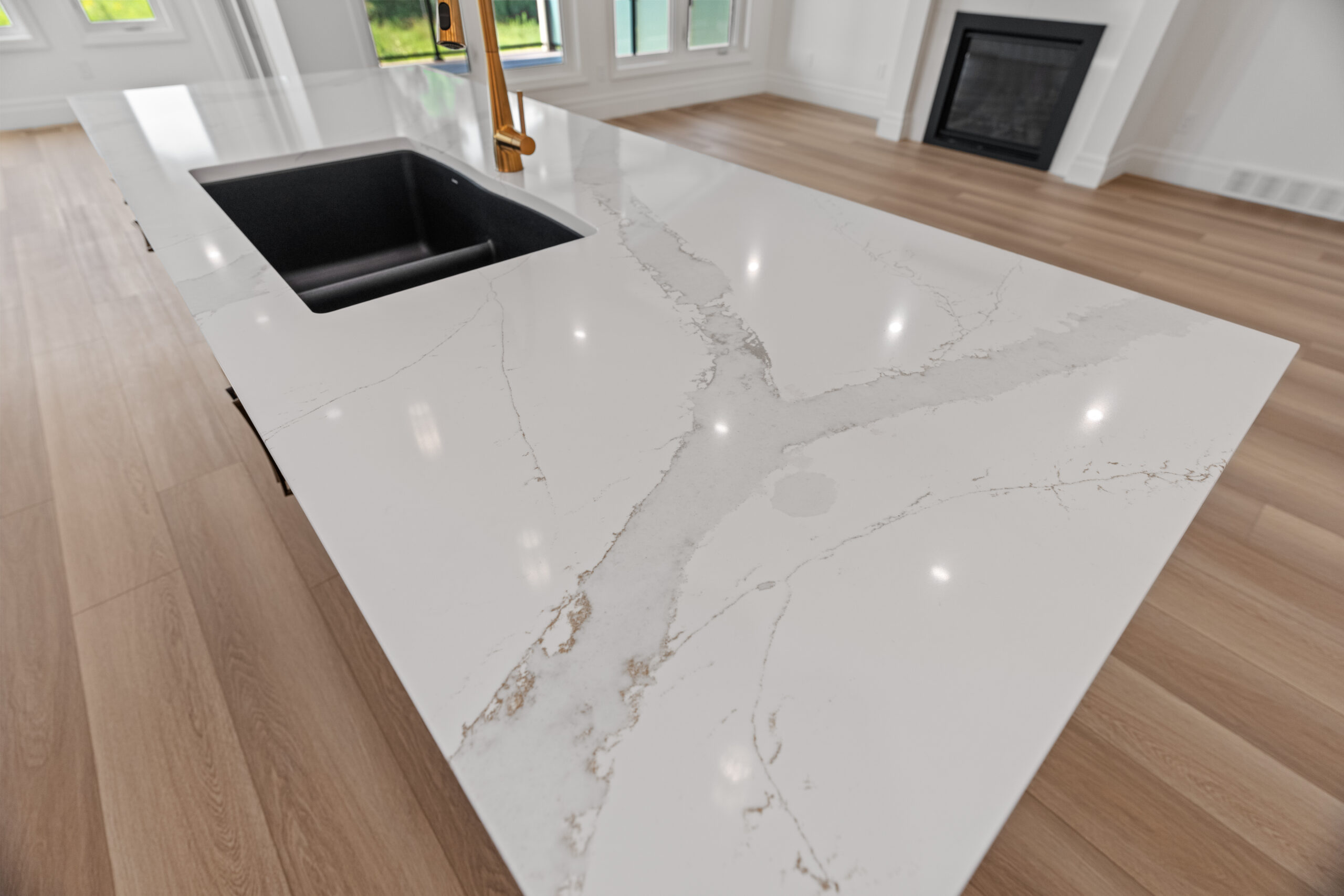
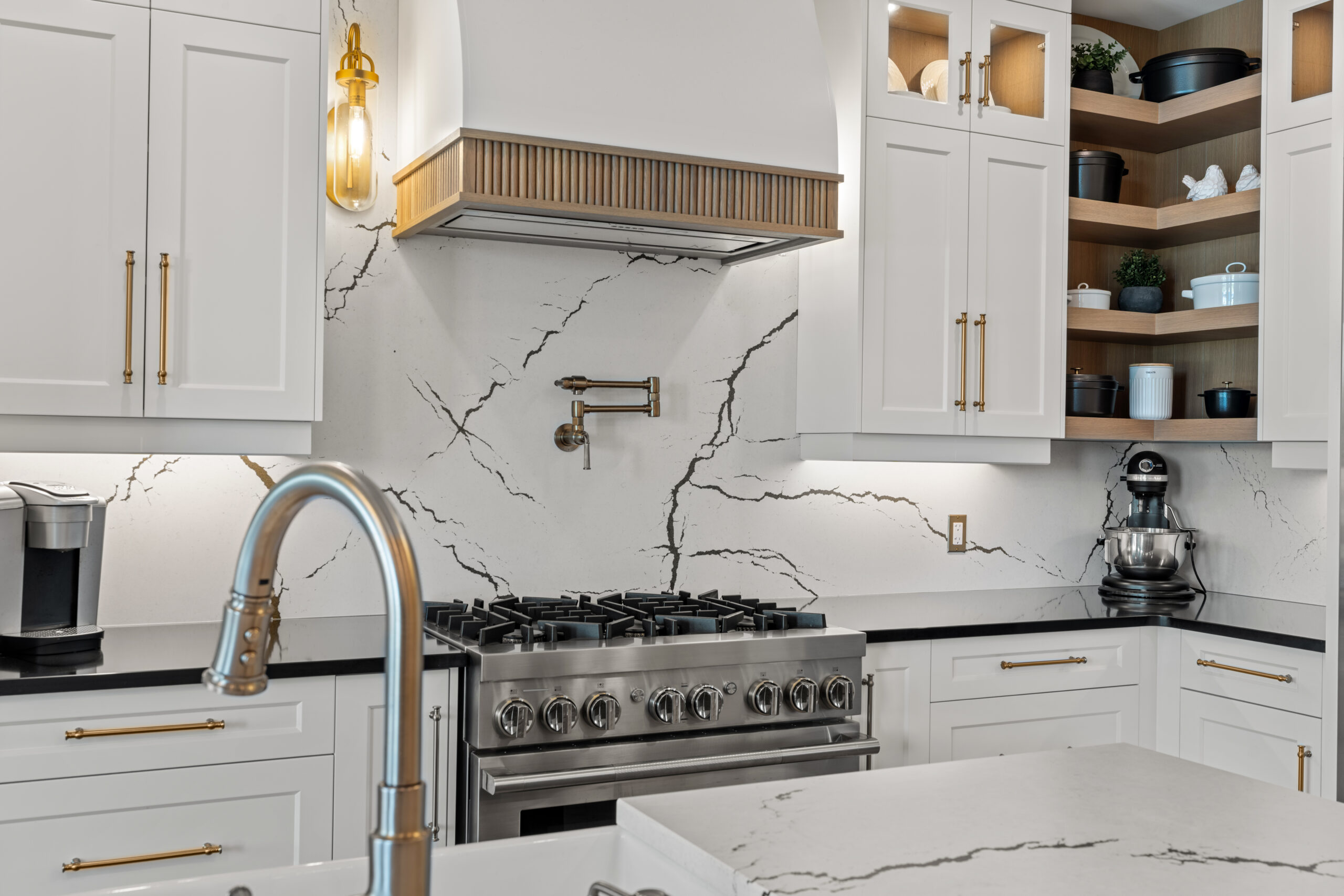
If you’ve selected a countertop with bold veining, noticeable movement or a distinctive pattern, consider keeping the backsplash quieter. A simple subway tile, softly textured ceramic or understated neutral can complement the countertop without competing with it.
If your countertop and cabinetry are relatively simple, you have more room to make the backsplash a feature. Colour, pattern, texture or an unexpected tile shape can add personality without overwhelming the kitchen.
The goal isn’t to make every finish a statement. It’s to create enough contrast and interest that the kitchen feels layered while still allowing the different materials to work together.
Pay Attention to Your Cabinet Colour and Undertones
One of the easiest backsplash mistakes to make is choosing tile based on colour alone.
White cabinetry is a good example. Two cabinet doors may both look white, but one can have a warmer, creamier undertone while another leans cooler or more grey. Put the wrong white backsplash beside either one and the difference can suddenly become much more noticeable.
The same principle applies to wood cabinetry. Look at whether the wood has warm, golden, red, neutral or cooler undertones and consider how your backsplash relates to them.
With coloured cabinetry, including popular blues, greens and deeper neutrals, you can either choose a backsplash that quietly complements the cabinetry or use contrast intentionally.
This is why seeing your cabinetry, countertop and backsplash samples together is so important. A tile you love by itself isn’t necessarily the tile you’ll love once every finish is in the room.
Let Your Countertop Help Narrow Down Your Backsplash
Your countertop is often one of the best places to start when choosing a kitchen backsplash.
Look closely at its base colour, veining and overall amount of movement.
A quartz countertop with prominent veining may pair beautifully with a simpler backsplash that picks up one of the softer tones within the surface. A quieter countertop, on the other hand, leaves more opportunity to introduce texture, colour or pattern through the backsplash.
You don’t necessarily need to find an exact colour match. In fact, trying to match two slightly different whites or greys can sometimes make the difference between them more obvious.
Instead, think about whether the finishes relate to one another.
Bringing your countertop sample and cabinet door with you when selecting backsplash tile makes it much easier to compare everything as one palette rather than making each decision separately.
Think About More Than Just the Tile Colour
Colour gets a lot of attention when choosing a kitchen backsplash, but it’s only one part of the finished look.
Tile size, shape, texture, sheen and layout can completely change how a backsplash feels.
A classic subway tile can feel traditional in a running-bond pattern, cleaner and more contemporary when stacked, or more architectural when installed vertically. A handmade-look tile can introduce subtle texture and variation even when the colour itself is simple.
Glossy tile reflects more light and can add brightness to a kitchen, while a matte finish generally creates a softer look.
Even the scale of the tile matters. Smaller formats create more grout lines and visual detail, while larger tile can create a calmer, more continuous surface.
If your kitchen already has several prominent finishes, simplicity may be exactly what the backsplash needs.
Consider How the Backsplash Works With Your Flooring, Too
Your cabinets and countertops may sit directly beside the backsplash, but they’re not the only finishes that matter.
Your kitchen flooring is part of the same visual space.
This becomes particularly important in open-concept homes where the flooring continues through the kitchen, dining and living areas. Wood tones, luxury vinyl, tile and other flooring materials can introduce additional warm or cool tones that should be considered when building the kitchen palette.
Looking at cabinetry, countertops, backsplash and flooring together helps prevent individual selections from fighting with one another once everything is installed.
It’s also one of the reasons making selections as part of the overall kitchen design can be easier than choosing each finish independently.
Don’t Treat Grout as an Afterthought
Grout might seem like a small detail, but it can dramatically change the appearance of backsplash tile.
A grout colour close to the tile creates a softer, more continuous look. A contrasting grout emphasizes the shape and layout of each tile and can make the pattern much more noticeable.
Consider the look you’re trying to create before automatically choosing white grout.
Maintenance matters as well. Kitchen backsplashes need to handle everyday cooking, splashes and cleaning, particularly around the range and sink.
Your tile and grout should work for the way you actually use the kitchen, not just the way you want it to photograph on installation day.
Decide Where Your Backsplash Should Start and Stop
Another detail worth planning early is how much of the wall you’re actually tiling.
Depending on the kitchen design, backsplash tile might run between the countertop and upper cabinetry, extend behind a range hood, continue around a window or reach all the way to the ceiling.
There isn’t one layout that works for every kitchen.
Consider the cabinetry layout, windows, open shelving, range hood and other architectural features before deciding where the tile should end.
These details are much easier to resolve during the design stage than after the tile has already arrived.
Always Look at Your Samples Together
This might be the most important step.
Don’t choose your kitchen backsplash from a photo on your phone or from one tile sample sitting by itself.
Put your finishes together:
- Cabinet door
- Countertop
- Backsplash tile
- Flooring
- Hardware and fixtures
- Paint colour
Then look at them under different lighting.
Natural daylight, showroom lighting and your home’s interior lighting can all change how a colour appears. Whites can suddenly look creamier. Greys can lean blue. Wood tones can appear warmer.
Looking at the complete palette gives you a much better idea of how your finished kitchen will actually feel.
Choosing the Right Backsplash for Your Kitchen Renovation
The best kitchen backsplash isn’t necessarily the boldest tile or the one that’s trending right now. It’s the one that makes sense with the rest of your kitchen.
Your cabinetry, countertops, flooring, backsplash and hardware should feel like parts of the same design rather than a collection of individual selections.
When those decisions are considered together, even a simple backsplash can make the entire kitchen feel more intentional.
At Innovative Design Centers, our team helps homeowners bring those selections together, from cabinetry and countertops to flooring, tile and the details that complete the space.
If you’re planning a kitchen renovation in London, Exeter, Grand Bend, Sebringville or the surrounding Southwestern Ontario area, visit one of our showrooms to explore materials, compare finishes and start building a kitchen that works together from the beginning.