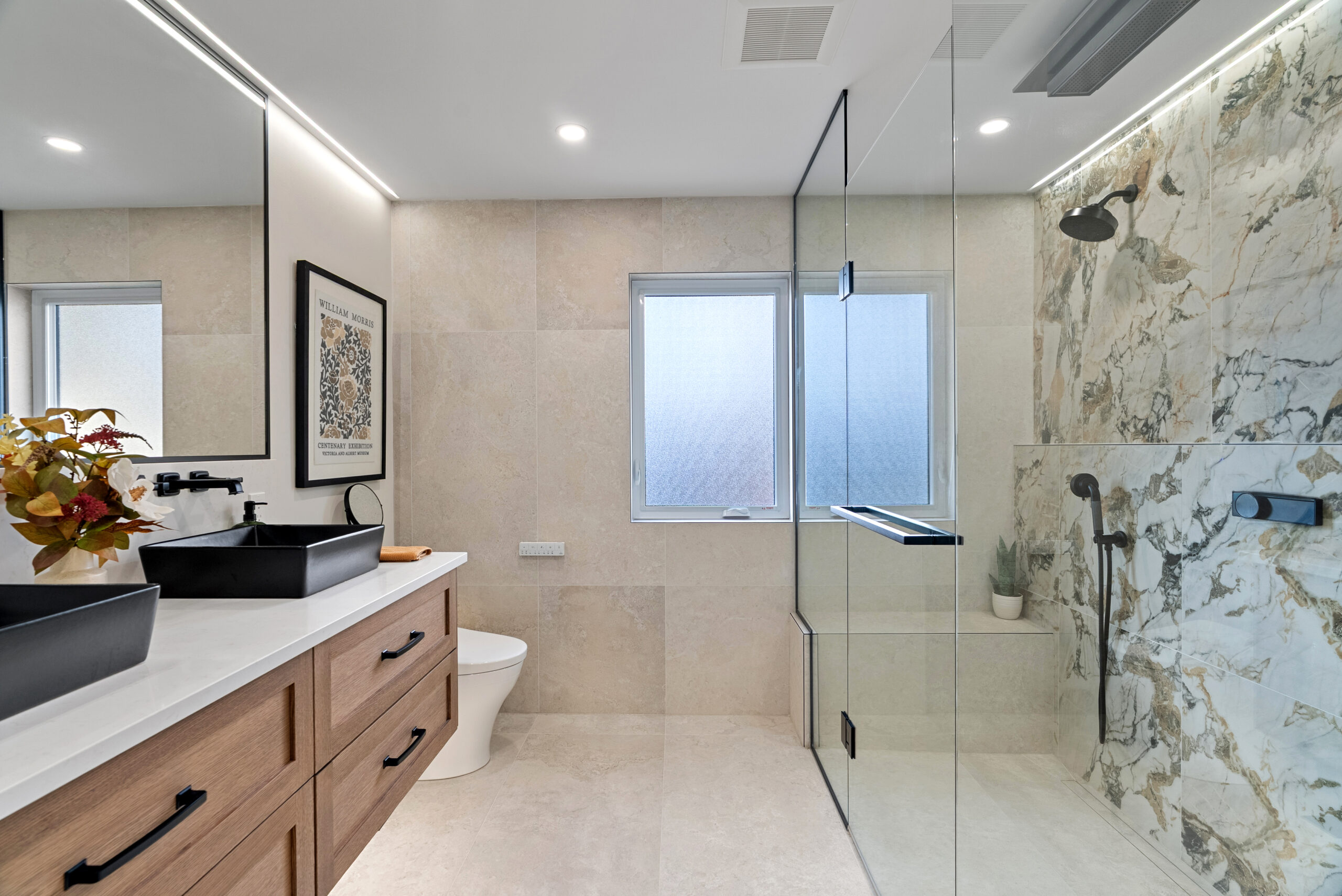
A kitchen renovation can involve a surprising number of decisions before the first cabinet is installed: layout, demolition, electrical planning, flooring transitions, countertop measurements, tile, lighting, paint, plumbing fixtures, and scheduling. A full service interior renovation company brings those moving parts under one coordinated team, so the finished room is planned as a whole rather than assembled through separate handoffs.
For Ontario homeowners, builders, and commercial decision-makers, that coordination can make the difference between a project that feels manageable and one that becomes a daily exercise in chasing answers. The right partner does more than provide products or book trades. It creates a clear path from early ideas to a finished space that works beautifully and holds up to real life.
What Full-Service Renovation Really Means
The phrase “full service” is often used broadly, so it is worth asking what is actually included. A true end-to-end renovation partner can manage the work before, during, and after finishes are selected. That typically begins with understanding the space, the people using it, the investment range, and the conditions behind the walls and under the floors.
From there, the process connects interior design with construction reality. A proposed kitchen island must work with circulation, appliance clearances, electrical locations, and flooring. A bathroom tile selection has to suit the room’s moisture exposure, subfloor preparation, shower waterproofing, and maintenance needs. Beautiful materials matter, but they perform best when the preparation and installation are treated with equal care.
At Innovative Design Centers, that integrated approach brings design, material sourcing, custom cabinetry and millwork, flooring, countertops, tile, fixtures, lighting, demolition, site preparation, and certified installation into one organized project model. Rather than leaving clients to coordinate a designer, retailer, fabricator, and several independent trades, one team carries accountability through the project.
Why Fewer Handoffs Protect Your Project
Renovations become difficult when responsibility is scattered. If a cabinet installer discovers that a flooring height was not considered, or a countertop measurement is delayed because cabinetry is incomplete, the client can end up relaying information between companies. Each party may be capable, yet no one owns the full result.
A full service interior renovation company helps prevent these gaps by planning dependencies early. Demolition and site preparation create a clean, stable base. Design decisions are reviewed alongside product lead times and installation requirements. Cabinetry, flooring, tile, countertops, and fixtures are sequenced so one completed step supports the next.
This does not mean every project is free of surprises. Older Ontario homes can reveal uneven floors, outdated wiring, hidden water damage, or framing conditions once finishes are removed. The value of an integrated team is how those discoveries are handled: assessed promptly, communicated clearly, priced honestly, and resolved with the overall plan in mind.
One Point of Contact, Better Information
A single point of contact is not just a convenience. It gives clients a reliable source for decisions, timing, and next steps. Instead of wondering whether a material delay has been shared with the installer or whether a layout change affects the plumber, the project team manages that communication internally.
For homeowners balancing work, family, and a temporary disruption to daily routines, this clarity is significant. For builders and developers, it also reduces coordination burden across multi-unit or time-sensitive projects. Reliable updates allow other work to be planned with greater confidence.
Design Choices That Work Together
A room should not feel like a collection of individual purchases. Cabinet finishes, flooring tone, wall tile, countertop pattern, hardware, lighting, and paint all influence one another. More importantly, they need to support how the space will be used.
In a busy family kitchen, durable surfaces and storage planning may take priority over a high-maintenance finish. In a cottage, the goal may be easy cleaning, relaxed comfort, and materials that suit changing seasons. A commercial or multi-residential project may require finishes that meet performance expectations while remaining consistent across multiple spaces.
A full-service team helps clients make these choices with the entire interior in view. The result can be timeless or contemporary, restrained or expressive, but it should feel intentional.
The Interior Renovation Process From Concept to Completion
Every project has its own scope, but a well-managed process follows a dependable structure. Early conversations establish objectives, budget considerations, style preferences, and any practical concerns with the existing space. This is the point to discuss what is essential, what is flexible, and what may need to happen in phases.
The design and planning stage turns those conversations into a workable direction. Layouts are refined, materials are selected, and details such as cabinetry configuration, flooring transitions, fixture placement, and lighting are considered before installation begins. Clients should leave this stage with a clear understanding of what is being built, what products are being used, and how decisions affect the investment.
Once selections and scope are confirmed, ordering and scheduling can be coordinated. Lead times vary by product, particularly for custom cabinetry, specialty tile, countertops, and fixtures. Ordering with the installation sequence in mind helps avoid a site that is ready for materials that have not yet arrived.
Then comes the physical transformation: demolition, preparation, construction work, installation, and finishing details. Quality installation starts beneath the visible surface. Floors need the right base. Tile needs careful layout and substrate preparation. Countertops need accurate templating after cabinets are secure. These technical steps are often less visible in a finished photo, but they influence durability, fit, and appearance for years.
Questions to Ask Before You Choose a Partner
Before committing to a renovation company, look beyond a showroom display or a single product category. Ask who manages the project from the first consultation through final installation. Ask whether the crews are in-house or subcontracted, how changes are documented, and who is responsible if a site condition affects the plan.
It is also reasonable to ask how the company approaches budgeting. A trustworthy partner will discuss allowances, product ranges, and potential variables early rather than presenting a low initial number that leaves little room for the real scope. Renovations involve trade-offs, and transparent conversations make those trade-offs easier to make.
Review work that is similar to your own project. A company experienced in flooring installation may be an excellent fit for a material-only project, but a whole-home renovation requires broader coordination. Likewise, a design firm may create an appealing concept, yet you should understand who is accountable for ordering, site preparation, and final installation.
For commercial clients and builders, capacity matters as much as aesthetics. Confirm that the team can coordinate volume, meet site requirements, maintain consistent installation standards, and communicate effectively with other construction partners.
When a Full-Service Model Is the Right Fit
Not every update needs an end-to-end renovation company. If you are replacing flooring in a straightforward, prepared room or purchasing materials for an experienced contractor, a focused installation or supply service may be the practical choice.
The integrated model becomes particularly valuable when several elements must work together. Kitchens, bathrooms, additions, condo renovations, cottages, custom homes, and multi-residential interiors usually involve overlapping trades, precise measurements, and finish decisions that affect one another. In these cases, centralized planning can reduce uncertainty and protect the quality of the final result.
The goal is not to make renovation feel complicated. It is to give each decision the attention it deserves while keeping the entire project moving forward. Start with the way you want to live or work in the finished space, then choose a partner with the design insight, material knowledge, installation standards, and communication discipline to build toward that vision with care.